

Placing a family after a claim is part logistics, part reassurance. Here's how to find the right temporary home quickly, keep the paperwork straight, and help the household feel settled while the repairs get done.
What a displaced household needs from a temporary home
When a family can't live at home after a flood, a leak or a fire, the first thing they lose is their routine. A good temporary home gives as much of that back as it can, so the family can get on with the claim and the rest of their lives.
Staying close to home
For most households, distance matters more than anything else. Children still need to get to the same school. Adults still need to get to work, and often to the damaged house too, to meet surveyors, contractors and loss adjusters. A home a short walk or one bus from their own street keeps all of that manageable. A home across the city can turn a 10-minute school run into an hour each way.
Space to live, not just sleep
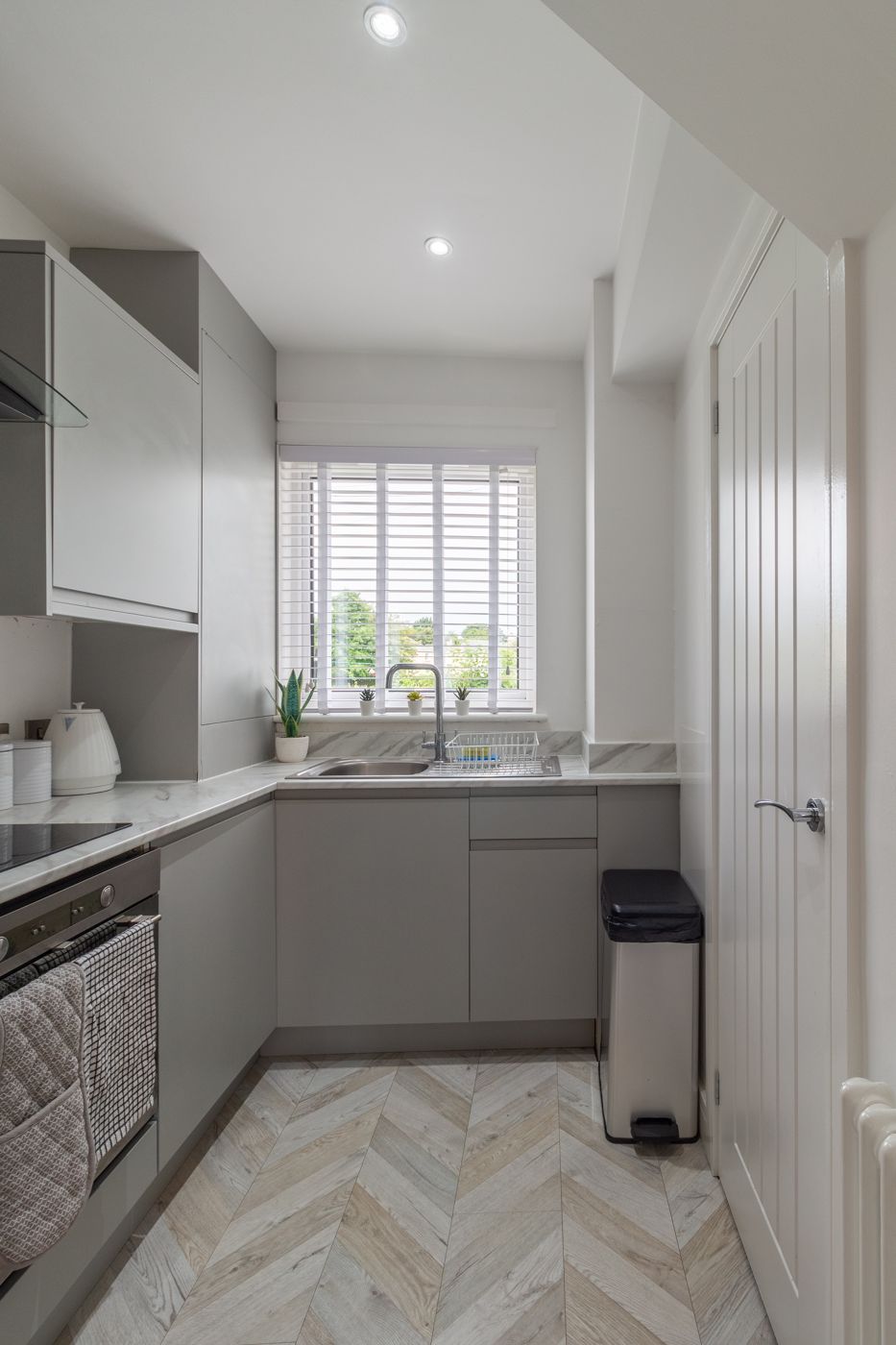
A family in two hotel rooms is managing. A family in a whole home is living. Each of our homes is a whole flat or house, with its own front door. That means somewhere to cook a normal tea, do homework at a table and put the children to bed in their own room.
Things that matter more than they sound
- A washing machine. Clothes are often damaged or stuck in the house.
- Enough bedrooms. Teenagers sharing with younger siblings for a few weeks is a common source of strain.
- A calm stair. After the stress of the incident itself, a quiet building helps everyone sleep.
- Somewhere to work. If one adult works from home, a table and decent wifi matter. Tell us and we'll check which homes fit, in the same way we do for visiting professionals.
Matching a home to the claim: size, area and the details that count
Describe the household, not just the head count. "Four people" could mean two adults and two toddlers, or four adults who each need their own room.
Size and bedrooms
Our homes run from one to five bedrooms. Think about how the household sleeps at home and aim for something close to it. Say whether children can share, whether anyone needs a single bed, and whether a cot is needed. Every home has a guest limit set by its short-term let licence, so we'll always book within it.
Area
Send the postcode of the damaged property, and the school or workplace if it's in a different part of town. We have homes across Edinburgh, from Leith and Granton to Haymarket, Fountainbridge and the city centre, and in East Lothian. We won't promise a particular street. We'll tell you honestly what we have nearby, and how far it is. Our Edinburgh stays give a sense of where the homes are.
Parking and getting around
Some homes have parking, many don't. If the family needs a car for work, or to get back to the house for appointments, say so up front.
Stairs, pets and health
A lot of Edinburgh homes are up tenement stairs with no lift. If anyone in the household struggles with stairs, has a health condition, or uses a pram every day, tell us. If the family has a pet, tell us that too. It limits the options and we can't always help, but we'll give you a straight answer rather than a hopeful one.
What to send us for a fast match
The form on this page covers the basics. For an insurance placement, these extra details help us come back with homes that actually fit, rather than a long list you have to filter yourself.
- Who you are and who you act for. Your company, your role, and the insurer, if you're an agent or loss adjuster working on their behalf.
- The household. Number of adults and children, the children's ages, and how they'd like to sleep.
- Where they need to be. The postcode of the damaged home, plus school and work locations if relevant.
- Dates. The start date, and your best guess at the end date. A range is fine: "three to five weeks" is more useful than nothing.
- Must-haves. Parking, ground floor or few stairs, a washing machine, a cot, a desk.
- The paperwork. Who we invoice, the billing contact, any purchase order number, and the claim reference you want on the invoice.
- Who we speak to. Whether we deal with you only, or with the household too for day-to-day questions.
If you don't have every answer yet, send what you have. We'd rather start looking with half the picture than wait for the whole thing. You can also call the team on +44 (0)131 560 6614 or use any of the ways on our contact page.
If you book stays for staff as well as claims, the same approach works for company accommodation, and for crews and engineers on contractor stays.
Booking, extensions and invoicing with Stays In
The paperwork is often the part that takes longest on a claim. We try to keep our side of it short and tidy, so you can put it straight on the file.
Booking
Once you've chosen a home, we confirm the dates, the household and the billing details in writing. You get one contact at Stays In for the whole booking, and for any others you place with us. Every guest's ID is checked before an access code is sent, so we'll need the name of the lead adult in the household.
Invoicing
- We invoice your company, not the family.
- We can add your claim reference, and any purchase order number, to the invoice.
- The invoice shows the home, the dates and the cost, with the Visitor Levy shown as its own line for Edinburgh stays.
- If several claims or budgets are involved, tell us how you'd like the invoices split before you book.
Extensions
Repairs rarely finish on the first estimate. Drying out a flat after an escape of water, or waiting for a trade, can add weeks. Our stays run from a few nights to a few weeks, and we don't offer long tenancies. If the repairs look like running longer than planned, tell us as early as you can. We'll check whether the same home is free for the extra dates and tell you honestly what we can do. An early word gives the family the best chance of staying put rather than moving twice.
If you'd like to know more about who we are before you place a first booking, our about page introduces the team.
Keeping the household informed and settled
A family moving into a temporary home is usually tired and unsettled. Clear information at the start takes a lot of the strain out of the first evening.
Before they arrive
The household gets clear arrival instructions for the home and an access code on the day. Self check-in means they can arrive when it suits them, after school or after a late visit to the damaged house, without waiting for someone with a key. Tell the family to expect the message, so it isn't missed.
While they stay
The family can message our team from 9am to midnight, and there's a 24/7 line for emergencies. Day-to-day questions, like how the heating works or where the bins go, come straight to us rather than to you. If something in the home needs fixing, we deal with it. You stay the main contact for the booking itself: dates, extensions and invoices.
Living in a shared stair
Many of our homes share a stair or a building with neighbours. Each home has clear house rules, and we're quick to respond if a neighbour gets in touch. Our page for neighbours explains how we look after the buildings our homes are in. For a family settling in for a few weeks, a calm, well-run stair is part of what makes it feel like home.
Ending the stay and handing back the home
The end of a temporary stay is often decided by someone else: the contractor, the drying equipment or the final sign-off on the repairs. That makes it hard for anyone to give a firm date far ahead. A little planning makes the move home easier for the household and for you.
Before the last week
- Tell us the expected move-home date as soon as you have it, even if it might change.
- If the date slips, let us know before the booked check-out, not on the day.
- If the family wants to go home early, tell us that too, so we can confirm the new dates and the invoice.
On the day
The household gets clear check-out instructions: what time to leave, what to do with the keys or code, and what to leave as they found it. After every stay, our own team cleans the home and checks it.
Closing the file
Once the stay ends, the final invoice reflects the actual dates, with your claim reference on it. If anything about the stay needs explaining for the insurer, ask us.
If you'd like a sense of how stays with us tend to go before you place a worried household, our reviews from guests are a good place to start.
Edinburgh notes for insurance placements
Edinburgh is compact but particular. A few local details are worth knowing before you place a family here.
Tenement stairs
Much of the city's housing is in tenements: flats off a shared stair, often three or four floors up with no lift. A top-floor flat with a pram and shopping bags is hard work. Tell us about stairs early and we'll suggest homes that suit.
Controlled parking
Much of central Edinburgh has controlled parking. If the household has a car, tell us, and we'll say which homes have parking or how parking works nearby. If the household runs a car, a home with its own space, or one further out, may suit them better than a central flat.
August and Hogmanay
The Fringe fills the city every August, and Hogmanay and the New Year are busy too. Big rugby weekends and graduations add pressure in their own weeks. Outside those times there's more choice. During them, homes can be booked well ahead. If a claim starts in late July or December, contact us as soon as you know, and widen the area if you can.
The Visitor Levy
Stays in the City of Edinburgh include the 5% Visitor Levy on the first five nights of each stay. On a stay of several weeks, it's a small part of the bill. It's shown on the invoice. If the insurer asks about it, our Visitor Levy page explains how it works.
East Lothian
For households in Musselburgh, North Berwick or nearby, we also look after homes in East Lothian. The Edinburgh Visitor Levy doesn't apply there. Our North Berwick stays show some of what we have on the coast.
Insurance accommodation vs hotels for families
Hotels have their place, especially for the first night or two after an incident, when a family needs a bed and nothing else. For a stay of more than a few nights, a whole home usually works better for a family. Here's how they compare.
| What matters | Hotel rooms | A whole home |
|---|---|---|
| Sleeping | Often two rooms for a family, sometimes on different floors | Separate bedrooms under one roof |
| Meals | Eating out or room service most nights | A full kitchen to cook normal meals |
| Laundry | Hotel laundry or a launderette | A washing machine in the home |
| Homework and work | A small desk in a bedroom | A table, a living room and space to spread out |
| Location | Wherever the hotels are | Homes across Edinburgh and East Lothian, so often nearer the family's own area |
| Routine | Hard to keep for more than a few nights | Close to the family's normal week |
A whole home also gives children back their own bedtime and a sofa to watch television on. For adults dealing with a claim, a quiet evening after a day of phone calls is worth a lot.
Every home we let has a short-term let licence, which gives you and the insurer reassurance that it meets the safety conditions the council sets. If you'd like to see the range, browse our homes, or talk to the team about the household you're placing.

Message us on WhatsApp on +44 7898 116933, or get in touch. We reply 9am to midnight, and the emergency line is there 24/7.